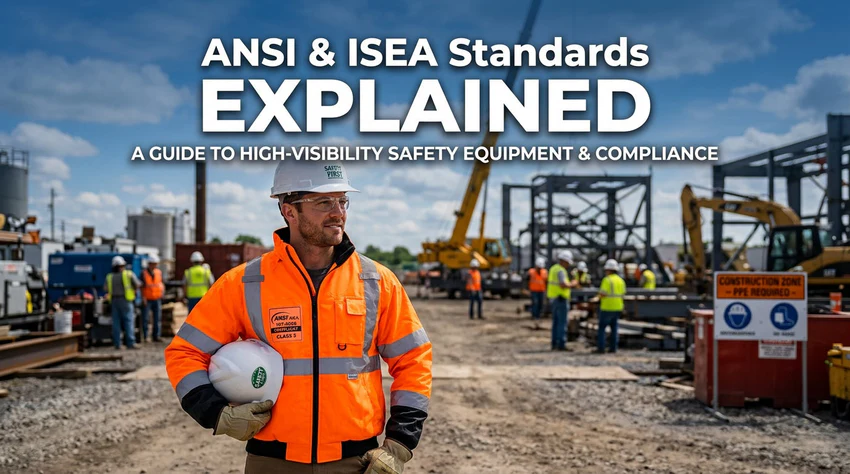
If you work in construction, roadwork, warehousing, utilities, or public safety, you’ve seen the labels: ANSI/ISEA compliant. But what do these standards actually mean — and why should you care? Let’s break it down in plain, everyday English.
What Do ANSI and ISEA Stand For?
-
ANSI (American National Standards Institute)The nonprofit organization that oversees voluntary safety and performance standards across U.S. industries. It sets the rules so products are tested, consistent, and reliable.
-
ISEA (International Safety Equipment Association)The group that develops and updates standards specifically for personal protective equipment (PPE) — including high‑visibility safety vests, jackets, and accessories.
Together, ANSI/ISEA create the gold‑standard rules for safety gear in the United States.
The Most Important Standard: ANSI/ISEA 107
For high‑visibility workwear, the key standard is ANSI/ISEA 107 (current edition: 2020). It defines exactly what makes safety apparel “compliant” — covering:
- Required fluorescent background colors (lime, orange, red)
- Retroreflective tape placement and size
- Minimum visibility performance day and night
- Garment classes based on risk level
Quick Class & Types Breakdown
- Class 1: Low‑risk, off‑road (warehouses, parking lots)
- Class 2: Medium‑risk, slower traffic (construction, utilities)
- Class 3: Highest visibility, high‑speed roads & low light
- Type O — Off-road, typically parking operations and lot maintenance.
- Type P — Public safety dimensions are different to accommodate equipment used by First Responders.
- Type R — Used mainly by construction workers of all kinds, Type R typically has more length than Type P.